
Maximizing Collector Reliability Through Preventative Care
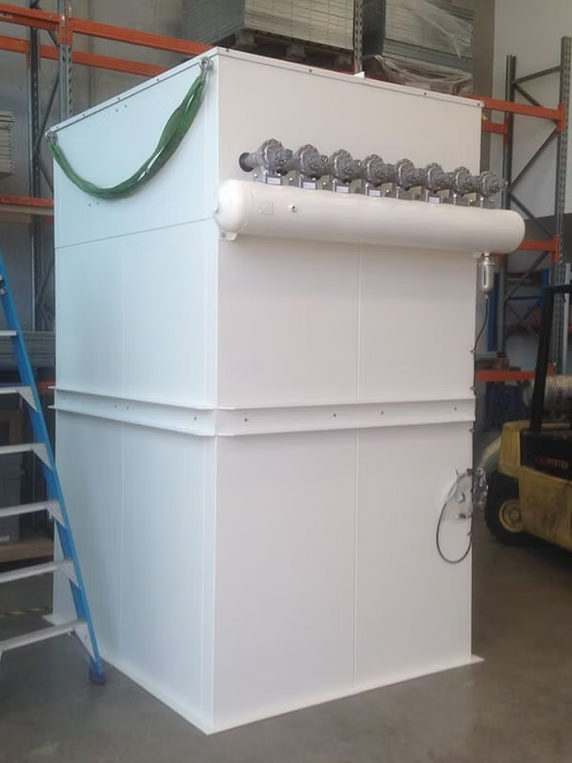
Reverse pulse dust collectors rely on short, supersonic bursts of compressed air (typically 5 to 6.5 bar for 100 milliseconds) to dislodge accumulated dust cakes from filter media. When solenoid pilot valves or rubber diaphragms fail, cleaning efficiency plummets, causing high differential pressure, reduced suction at pickup hoods, and premature bag blindness.
The 7-Point Routine Inspection Checklist
- Monitor Differential Pressure (DP): Ensure normal baseline DP remains between 750 Pa and 1250 Pa. A sudden spike indicates pulse failure or moisture in the compressed air; a sudden drop indicates torn bags.
- Inspect Compressed Air Quality: Verify desiccant air dryers and particulate filters upstream of the header tank are delivering clean, oil-free, dry air (ISO 8573-1 Class 2:4:2).
- Listen for Solenoid Pilot Firing: Walk the clean-air plenum while the sequencer operates. Missing clicks indicate burned-out solenoid coils or loose wiring.
- Check Diaphragm Valve Integrity: Constant hissing or continuous air discharge indicates a torn rubber diaphragm or a blocked bleed orifice.
- Inspect Hopper Discharge Airlocks: Verify rotary airlock wipers are not worn, ensuring dust discharges continuously without air ingress breaking the collector seal.
- Perform Fluorescent Leak Testing: Periodically introduce fluorescent tracer powder to the inlet duct and inspect the clean-air chamber under UV blacklight to identify microscopic bag pinholes.
- Check Fan V-Belts & Bearing Temperatures: Monitor vibration signatures and grease motor bearings with manufacturer-specified synthetic lubricants.